Earlier this year even Scrabble adapted its marketing concept to make way for the new, ever-growing, social language adding over 6,500 slang words to its dictionary (lol).
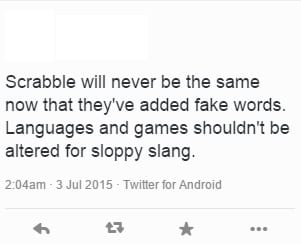
While some users took to twitter (ironically) to criticise the board game:
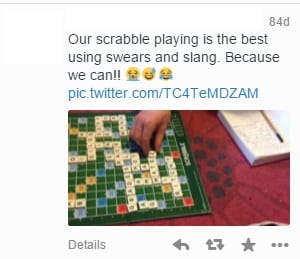
Others have really taken to the games new concept, reaping the benefits of being able to use various forms of slang and taboo language:
Which begs the question: Is it time to start integrating social speech into our marketing campaigns? Or should we adhere to using traditional formal speech because it’s what society regards as ‘proper English’?
Think: What’s the point of Marketing?
The only way we can retrieve a well-balanced answer is if we ask ourselves this very question: ‘what’s the point of marketing?’.
Marketing is a measure we use in business to promote our products and services in light of achieving maximum revenue. It’s essentially a strategic way of spreading the word.
As a rule, we’ll always promote our brand, services and products based on strategy. This means we’ll always utilise the specific platforms our consumers are engaging with.
Adapting this very idea to language; does this mean we should be embedding the type of speech our users employ, or is this indeed just a step too far?
It’s all about audiences…
Depending on the demographics we’re engaging with and the tone of the industry we’re promoting, I suppose the language we employ in our campaigns should really depend on the language our consumer’s converse and engage with.
So if we’re marketing a solicitors firm for example, our tone must reflect seriousness and formality whereas if we’re marketing a nightclub or bar: perhaps we do have more lee-way to be able to converse in a more relaxed tone if it means we’re going to attract wider audience bases.
The real answer lies in our audiences. If our audiences respond to social speech then there’s a huge argument to say we can be as ‘ridic’ as we wish, reflecting the way these demographics converse.